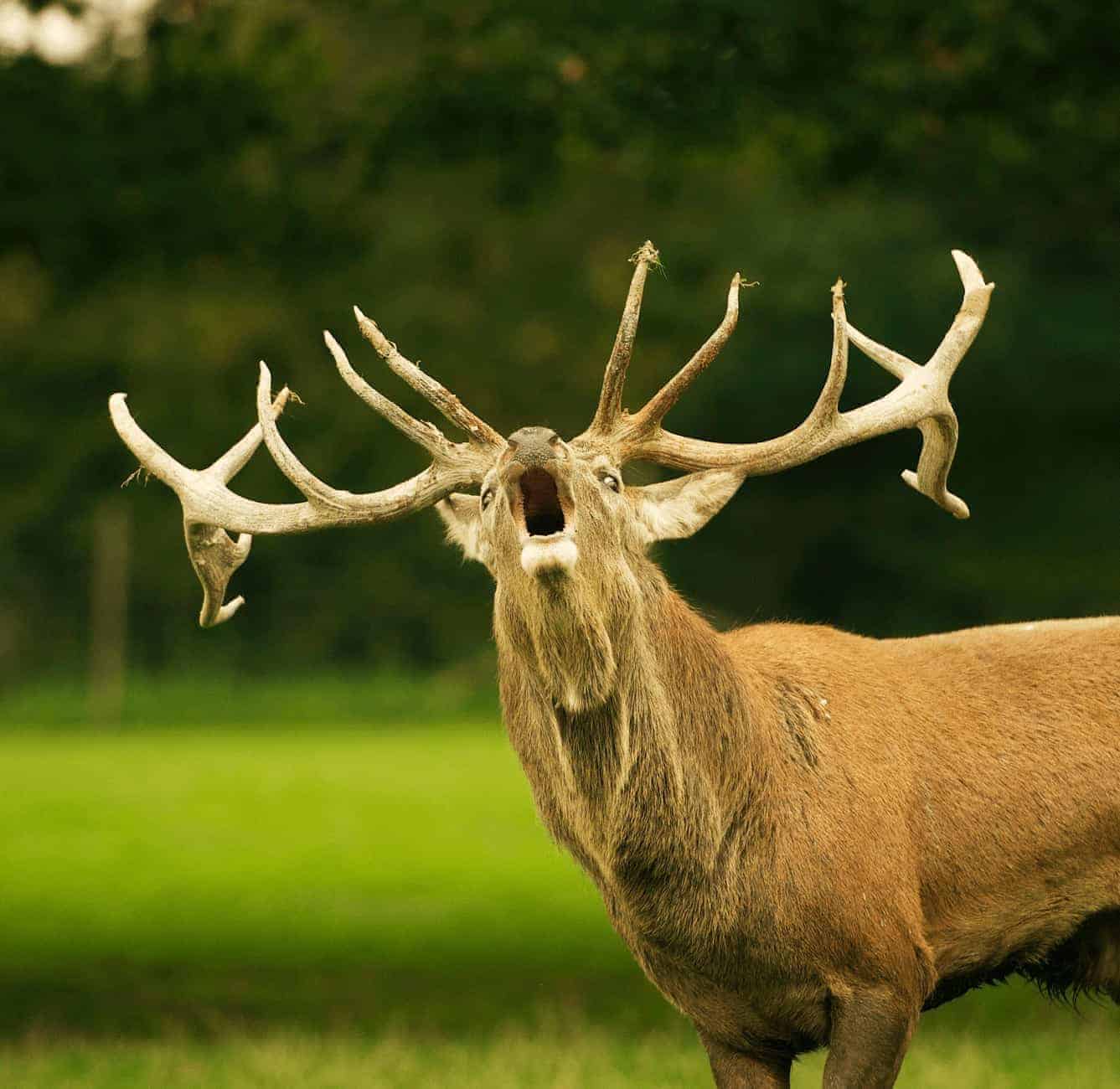
Red deer are Britain’s largest native land mammal and, together with the roe deer, are our only native deer species. All other deer species have been introduced. When ancient Britain was covered in woodland, red deer were widespread and vital to the survival of early man, providing meat, skins and antlers which were fashioned into tools.
Red deer are essentially woodland creatures but with centuries of forest clearance they have adapted to more open habitats. For much of the year red deer live in small single sex herds, but in the autumn mating season, know as the rut, mature stags leave their bachelor groups in search of hinds (females). A stag will usually round up and lay claim to a group of hinds, a harem, which he will defend from other males, using his antlers to fight off challenges from other males. In all deer species (except the reindeer) only the male has antlers. Antlers are shed each spring and immediately a new set starts to grow, taking 16 weeks to reach full size in August. You can see and touch a set of antlers shed by one of our stags in our Visitor Centre.
Origin: Native.
Size: Male (stag): Head /body length 210 cm, height at shoulder 120 cm. Female (hind): height at shoulder 107 cm.
Description: Male grows branching antlers and has long neck hair in the winter coat. Female smaller, more lightly built, without antlers. A stag reaches full size in 6 – 7 years.
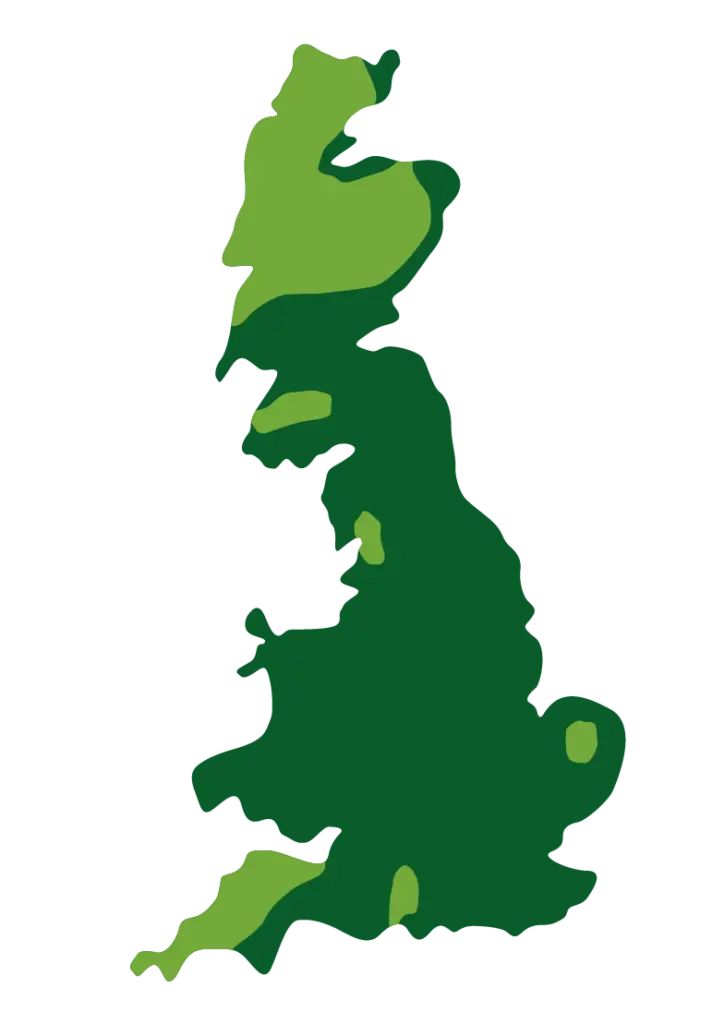
Habitat: Essentially a forest animal, but chiefly found in UK on the moorlands of Scotland and Devon.
Young: Gestation period is 9 months. A single calf is born in May or June and lies hidden in the undergrowth, well camouflaged, during the day for a week or so, when it will join the herd.
Diet: Grass, young heather shoots, moss, young leaves, shoots of trees, and in the winter they will strip bark from trees.